
Discover HELIOS ESS
May 27, 2025
Edison batteries
October 7, 2025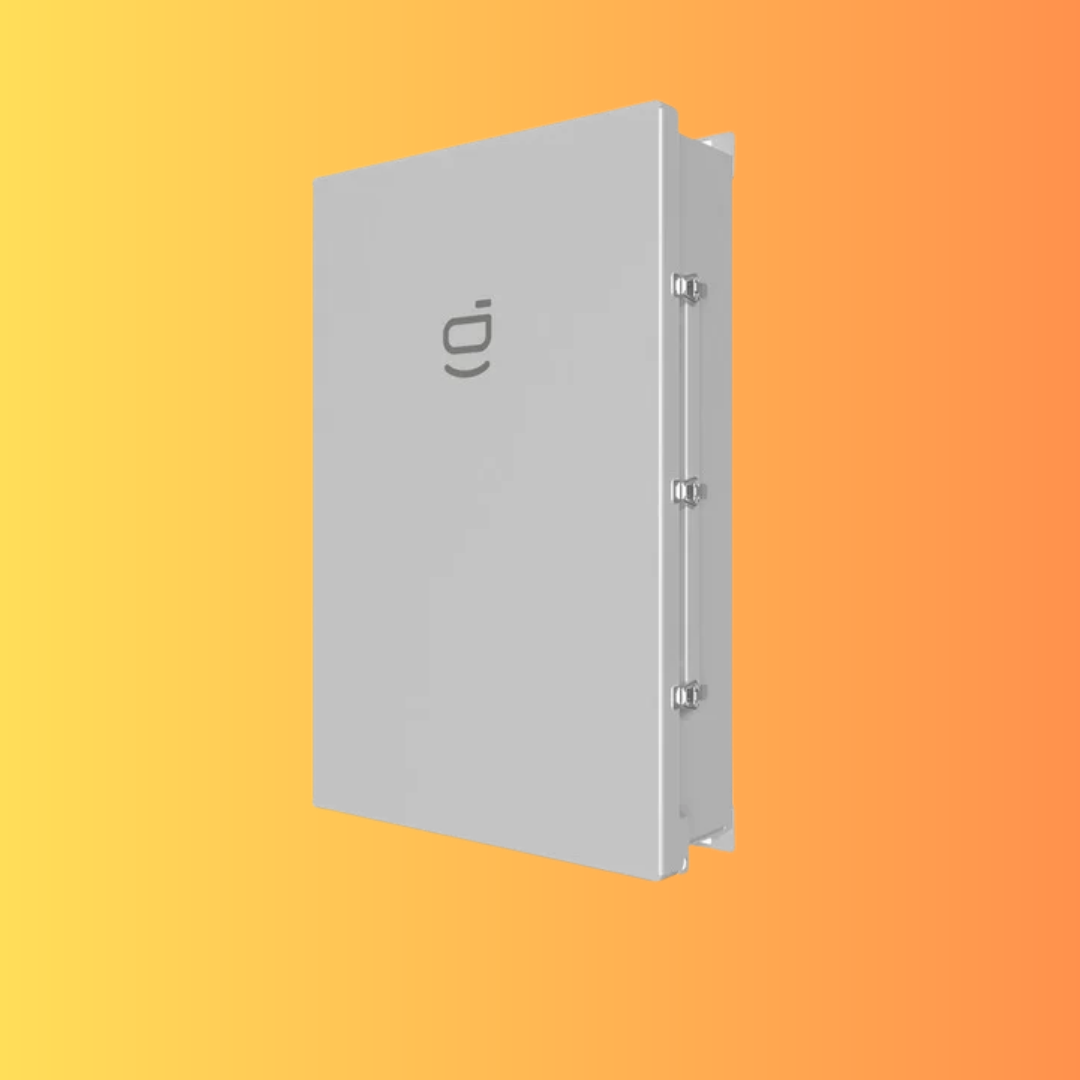
SIGENERGY LoadHub
$1,599.00
Backup gateway · smart transfer switch
no reboot, no flicker
whole-home or partial backup
11.5 kW per inverter
by SOC, schedule or source
2-wire auto start / stop
reverse power protection 100 ms
Sankey view per smart load
fanless, under 25 dB
UL 3141 · CSA C22.2 No. 107.1
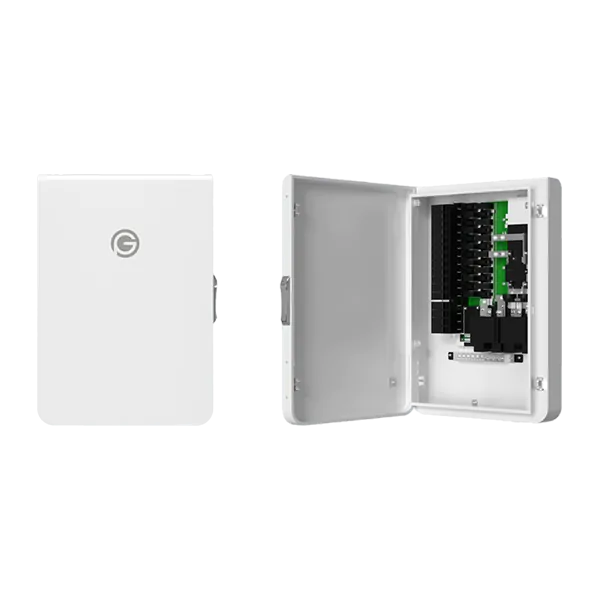
SIGENERGY LoadHub: the 200 A whole-home backup gateway with 0 ms switchover
Backup gateway · split phase 120 / 240 V · 200 A pass-through · 5 smart load ports · generator port · Type 3R outdoor enclosure
The 0 ms switchover requires a Sigen Energy Controller US and Sigen Battery US. The LoadHub does not work with third-party inverters or batteries.
The SIGENERGY LoadHub at a glance
| Product | Sigen LoadHub · US version (also listed as Sigen Energy Gateway) |
| Role | backup gateway between the grid, the main panel, SigenStor units and a generator |
| Grid connection | split phase · 120 / 240 V · 60 Hz |
| Pass-through current | 200 A continuous · 200 A max. breaker |
| Backup switchover | 0 ms load-side disruption with Sigen Energy Controller US + Sigen Battery US |
| SigenStor ports | 2 connections · 48 A each · 11.5 kW nominal per inverter |
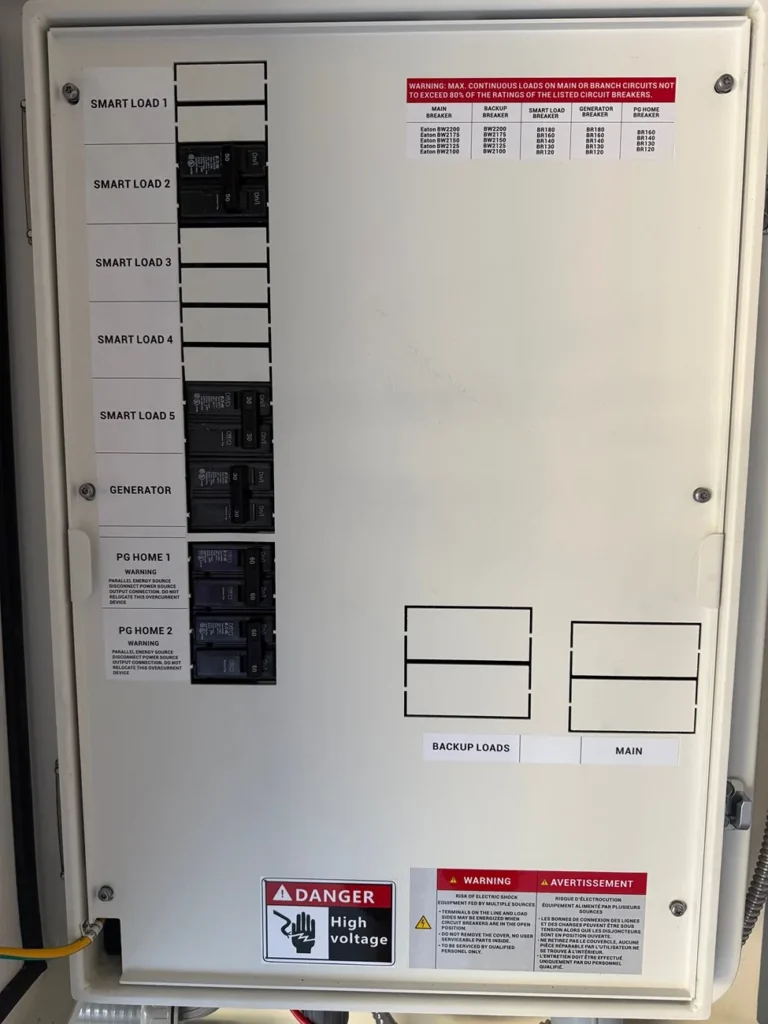
| Smart load ports | 5 double-pole controllable loads · 64 A each · 80 A max. breaker |
| Generator port | 64 A · 2-wire start · dry contact 30 V / 1 A |
| Enclosure | Type 3R · wall-mounted · natural convection · under 25 dB |
| Dimensions and weight | 21 × 32 × 7 in (532 × 814 × 180 mm) · 60 lbs (27 kg) |
| Certifications | UL 67 · UL 869A · UL 1741 · UL 1741 PCS CRD · UL 3141 · CSA C22.2 No. 107.1 |
The SIGENERGY LoadHub is the backup gateway of the Sigenergy ecosystem. First, it sits between the utility meter and your main distribution panel, with a 200 A pass-through. Then, when the grid fails, it isolates the home and hands the load over to SigenStor in 0 milliseconds. Moreover, it adds five controllable load ports and a generator port. You decide what runs on solar, battery, grid or generator. In short, it turns a SigenStor installation into a whole-home backup system.
“Most transfer switches are dumb relays: they flip, you lose power for a second, the clocks reset. The LoadHub is different because it is part of the same control loop as the inverter and the battery. On a job with two SigenStor units and a standby generator, the owner only knew about the outage because the app told him.”
— Julien, Perma Batteries
0 ms switchover: how the SIGENERGY LoadHub keeps the lights on
A conventional automatic transfer switch detects the outage, opens the grid contactor and then closes the backup side. As a result, loads see a gap of 20 to 100 ms, and sensitive equipment reboots. The SIGENERGY LoadHub works the other way around. First, the Sigen Energy Controller already runs in grid-forming mode, synchronized with the utility. Then, the LoadHub opens the grid side, and the loads never leave the inverter. Consequently, the measured load-side disruption is 0 ms. However, Sigenergy specifies this figure under one condition. The controller’s nominal power must exceed the total home load at the moment of the outage.
💡 What it means for you
Whole-home or partial-home backup: 200 A pass-through
The LoadHub carries 200 A continuously on both the grid input and the output to the main panel. Therefore, it supports whole-home backup on a standard 200 A service without a sub-panel. However, you can also choose partial-home backup. In that case, only the circuits on the output side are protected, and the rest stays on the grid. Furthermore, the five smart load ports give you a third option: keep the whole house on backup, yet let the LoadHub decide when the heat pump or the EV charger is allowed to run.
⚡ The Perma Batteries tip
Five smart load ports: control what runs, and on what
Each smart load port is a double-pole output rated 64 A continuous, protected by a breaker of up to 80 A. In practice, that covers a heat pump, a pool heater, an EV charger, a well pump or a water heater. The mySigen app then offers three control modes per port. First, start and stop on battery state of charge. Second, a time schedule. Third, a preferred power source: PV surplus, grid or battery. Additionally, the app shows a Sankey diagram of which source feeds each load, which makes the energy bill easy to explain.
| Control mode | Example | Why it matters |
|---|---|---|
| Battery SOC threshold | Cut the heat pump below 20 % SOC | protects backup autonomy during an outage |
| Time schedule | EV charger on overnight at off-peak rates | shifts load to cheaper hours |
| Power source selection | Pool heater on PV surplus only | turns excess solar into useful heat instead of export |
| Manual override | Force a load on from the app | keeps control during unusual situations |
Note that the ports switch the load; they do not meter it with revenue-grade accuracy. Nevertheless, the LoadHub measures current and voltage within 1 %, which is enough for the energy flow display and for load shedding decisions.
Generator port: 2-wire start and hybrid power sources
The generator port accepts 64 A continuous with an 80 A maximum breaker, which matches typical 10 to 15 kW standby generators. Moreover, the LoadHub provides a dry contact rated 30 V and 1 A for 2-wire start. Consequently, the system starts the generator automatically when the battery runs low, then stops it once SigenStor is recharged. During an outage, PV, battery and generator work together: the generator feeds the loads and charges the battery, while the inverter keeps the voltage clean.
🔧 Check the generator before you order
Built-in bypass and 100 ms reverse power protection
Reliability starts with a bypass path. Indeed, the LoadHub includes a bypass circuit so that a fault inside the unit does not cut the home off the grid. Then, reverse power flow protection reacts within 100 ms when export is not allowed. That satisfies most utility interconnection agreements for non-export systems. Finally, a 10 kA short-circuit current rating and overvoltage category IV cover service-entrance installation.
✅ Advantage: one certification package
Sizing the SIGENERGY LoadHub: currents and breakers
Three numbers define the limits. First, each SigenStor connection accepts 48 A continuous, so one Sigen Energy Controller US at 11.5 kW fills a port. Second, two ports give 23 kW of inverter power, or 96 A at 240 V. Third, the sum of smart loads cannot exceed what the panel breaker and the inverter can supply during an outage. Therefore, a typical configuration pairs the SIGENERGY LoadHub with two SigenStor stacks for a large home, or one stack plus a generator for a long-outage strategy.
⚠️ Two SigenStor connections, not more
Installation: Type 3R enclosure, wall-mounted, 60 lbs
The LoadHub is designed for outdoor mounting next to the meter. The Type 3R enclosure handles rain and sleet, and natural convection means no fan and no filter to service. However, it weighs 60 lbs, so plan a two-person lift and a solid backing. Communication with the controller runs over Fast Ethernet and RS485, plus dry contacts for the generator. According to Sigenergy, a full system commissions in about 10 minutes through the installer app.
| Dimensions (W × H × D) | 21 × 32 × 7 in · 532 × 814 × 180 mm |
| Weight | 60 lbs · 27 kg |
| Enclosure | Type 3R · wall-mounted |
| Cooling | natural convection · under 25 dB |
| Operating temperature | -22 to 131 °F · -30 to 55 °C |
| Max. altitude | 13,123 ft · 4,000 m |
| Communication | Fast Ethernet · RS485 · dry contact |
SIGENERGY LoadHub vs. a conventional automatic transfer switch
| Criterion | Conventional ATS | SIGENERGY LoadHub |
|---|---|---|
| Load-side disruption | 20 to 100 ms | 0 ms |
| Load control | none, or one shed relay | 5 double-pole ports, app-controlled |
| Generator start | 2-wire relay | 2-wire start, SOC-based automation |
| Solar during outage | often disabled | PV keeps charging the battery |
| Reverse power protection | separate device | built-in, 100 ms |
| Monitoring | none | mySigen app, Sankey energy flow |
The comparison is not entirely fair, because a transfer switch is a simple device and the LoadHub is a controller. Nevertheless, that is the point: on a Sigenergy system, one gateway replaces the transfer switch, the load shedding module and the generator controller.
SIGENERGY LoadHub datasheet
| Product | Sigen LoadHub · US version |
| Grid connection type | split phase |
| Nominal AC voltage | 120 / 240 V |
| Nominal AC frequency | 60 Hz |
| Max. short-circuit current (Isc) | 10 kA |
| Current / voltage measurement accuracy | ≤ 1 % / ≤ 1 % |
| Grid: max. continuous current | 200 A |
| Grid: max. overcurrent protection device | 200 A |
| Backup switchover disruption time | 0 ms (load side, with Sigen Energy Controller US + Sigen Battery US) |
| Output to main panel: max. continuous current | 200 A |
| Output to main panel: max. overcurrent device | 200 A |
| Overvoltage category | IV |
| SigenStor connections | 2 |
| SigenStor: max. continuous current | 48 A per connection |
| SigenStor: max. overcurrent device | 60 A |
| Max. AC nominal power per inverter connection | 11.5 kW |
| Smart load ports | 5 double-pole |
| Smart load: max. continuous current | 64 A |
| Smart load: max. overcurrent device | 80 A |
| Generator: max. continuous current | 64 A |
| Generator: max. overcurrent device | 80 A |
| Dry contact switch rating | 30 V · 1 A |
| Generator 2-wire start | supported |
| Dimensions (W × H × D) | 21 × 32 × 7 in · 532 × 814 × 180 mm |
| Weight | 60 lbs · 27 kg |
| Storage temperature | -40 to 158 °F · -40 to 70 °C |
| Operating temperature | -22 to 131 °F · -30 to 55 °C |
| Relative humidity | 0 to 95 % |
| Max. operating altitude | 13,123 ft · 4,000 m |
| Cooling | natural convection |
| Enclosure type | Type 3R |
| Communication | Fast Ethernet (FE) · RS485 · dry contact |
| Installation | wall-mounted |
| Standards | FCC Part 15 Subpart B · ICES-003 · ANSI C63.4a:2017 · UL 67 · UL 869A · UL 1741 · UL 1741 PCS CRD · UL 3141 · CSA C22.2 No. 107.1-16 · CA Proposition 65 |
| Datasheet version | 20260717 |
Powered By EmbedPress
Powered By EmbedPress
FAQ — SIGENERGY LoadHub
What is the SIGENERGY LoadHub?
Does the SIGENERGY LoadHub work with other inverters or batteries?
Can it back up the whole home?
How many SigenStor units can I connect?
What loads can the smart load ports control?
Does the LoadHub start a generator automatically?
Is the SIGENERGY LoadHub rated for outdoor installation?
Which certifications does it carry?
| Version | 48-48-5120, 48-48-5120-H (heated) |
|---|
Reviews
There are no reviews yet.